Irrigation that knows what you planted, and how far along it is.
Solar-powered, crop-specific irrigation built for African farms. It tracks your crop's growth and waters each zone on its own — completely offline, with no grid power, no cellular signal, and no monthly fees.
Plant on your schedule, not the rain's.
Every crop gets what it needs as it grows, without anyone standing over it.
100% solar, 100% offline. No grid, no cellular signal, no subscription.
Right now, the rain decides.
One planting cycle a year, set by the weather. Water carried by hand across ground that could be under drip. A buyer who wants your crop every week, sourcing it from importers instead, because you couldn’t plant when they needed you to.
Every month that continues, money leaves the farm for something your own land could have grown.
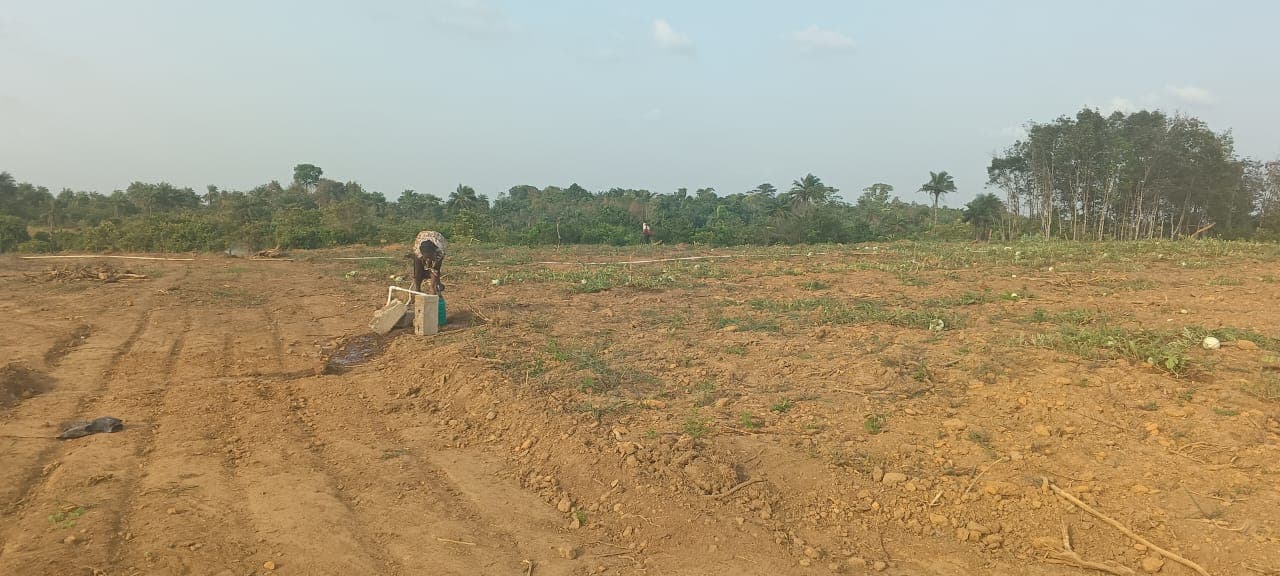
We built this for farms the others were never designed for.
What it is
A system that waters the farm while you do something else.
Tank, pump, pipe, and the part that decides. It runs on sunlight, it keeps running when the cellular network is down, and it knows the difference between what you planted here and what you planted there.
How the system adapts across distinct crop classes
Select a crop to explore its watering profile across the season:
Watering profile: Deep subsoil pulses with long dry-down intervals before harvest.
The sensor node tracks moisture at shallow, mid, and deep root layers down a single hole. When moisture crosses what that crop requires at its current stage, the controller operates the valve.
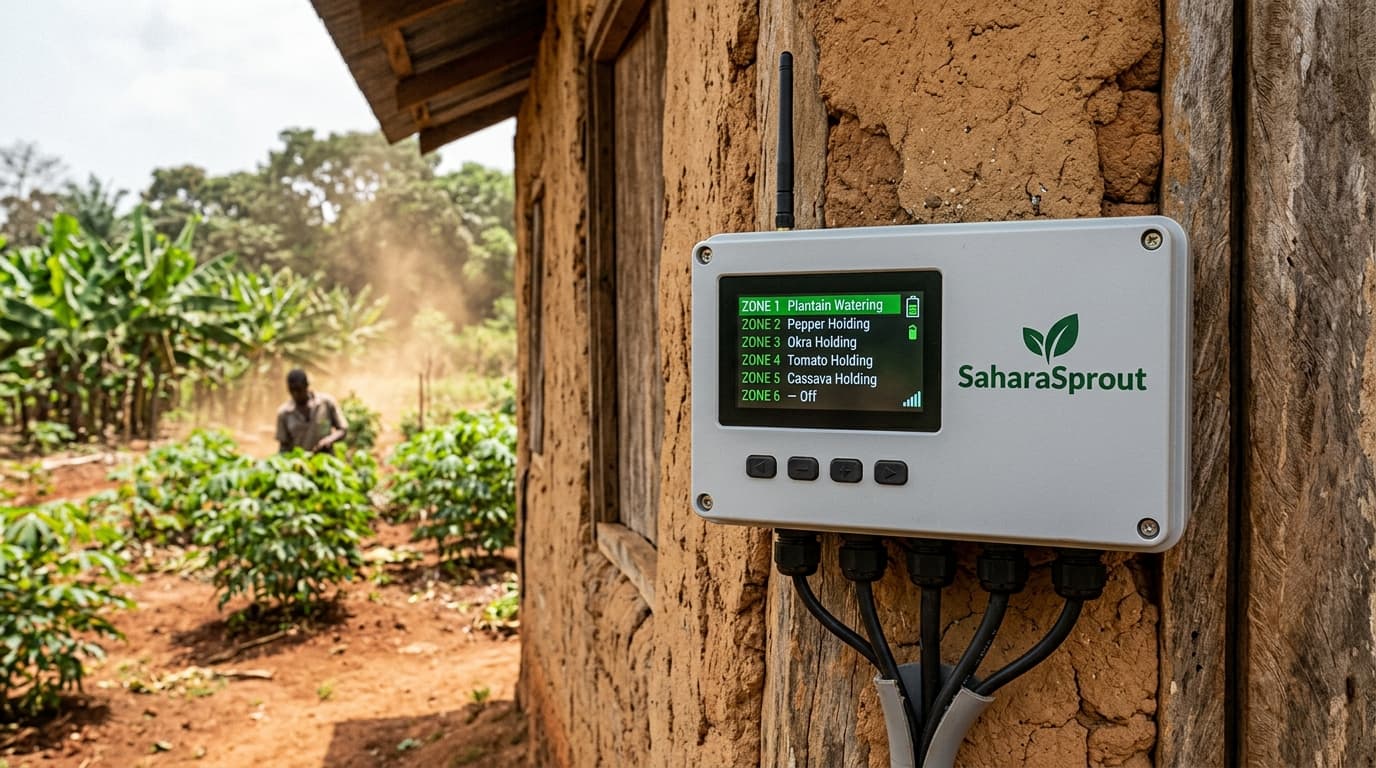
What the farmhouse screen shows
In Zone 3, drought-tolerant Sorghum dries down naturally without a drop. In Zone 4, Cowpeas require aerated soil to fix nitrogen. Meanwhile, high-transpiration Plantain in Zone 5 receives steady hydration. Same soil, zero guesswork.
Four crops, four different needs, one decision each — and nobody walked the field.
The controller opens the valve when that specific crop requires it, not when a clock runs out.
How it works on your farm
Three parts. One complete system.
If there is already pipe in the ground, this is the part that was missing. The pipe stays — we add what decides. Or we install the complete setup from bare ground.
Engineered for African weather and rural infrastructure. Sealed and vented against dust, rain and humidity, on lithium iron phosphate cells chosen for heat tolerance and long service life.
01 • In The Field
Solar Field Node
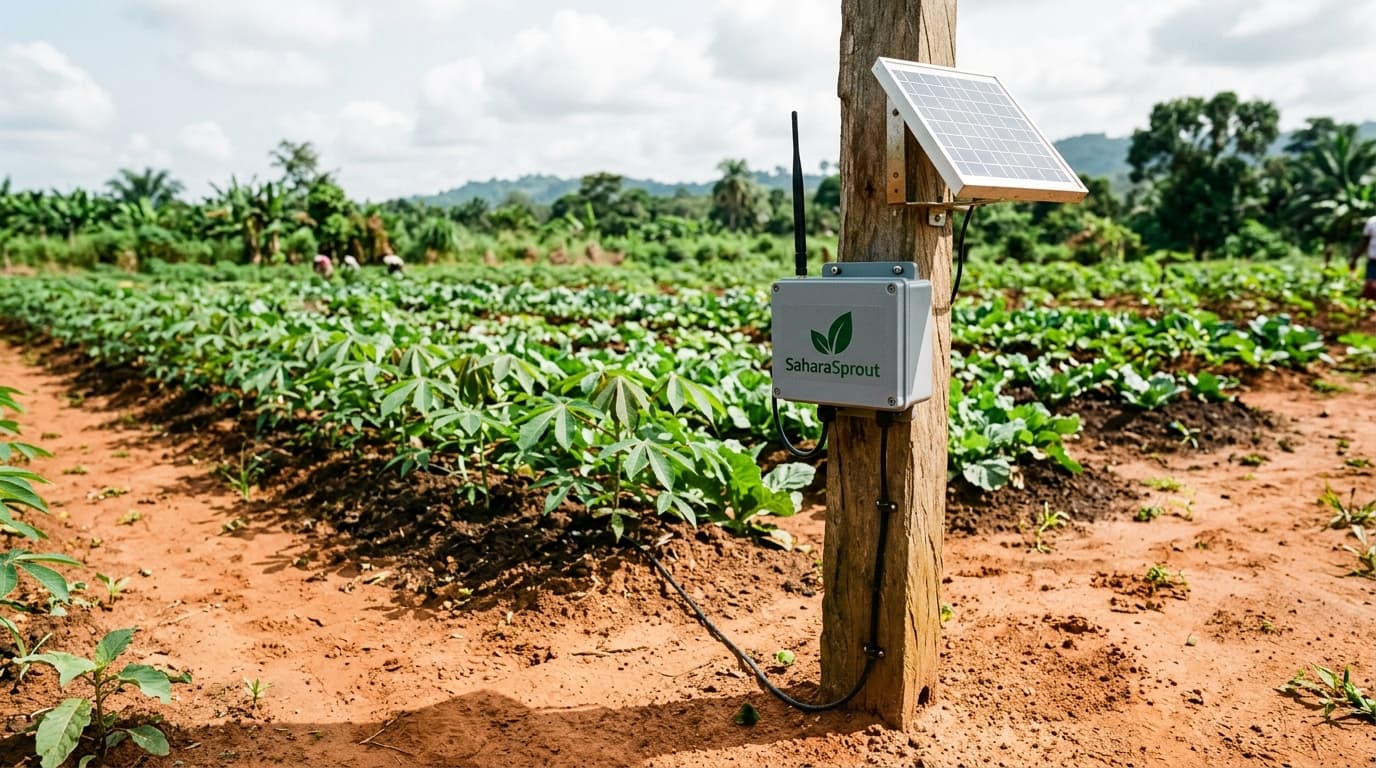
Mounted on a post in each zone with its own mini solar panel. A single cable descends into the soil, sensing moisture at three depths down one hole. It transmits readings back to the farmhouse wirelessly — no SIM card, no data plan.
- Solar powered with internal battery
- Senses at 3 depths in one hole
02 • On The Wall
Farmhouse Controller
A 5-inch daylight-readable screen mounted on your exterior wall. It knows what you planted in each zone and where it is in its season, managing all 6 zones and your pump. Operates 100% offline without requiring a smartphone or internet.
- 6 crop zones + pump control
- Sunlight-readable interface
03 • At The Crop
Precision Drip Network
Connects to your gravity tank, solar pump, or existing drip lines. If there is already pipe in the ground, it stays. Electronic valves open when that specific crop calls for water, delivering directly to plant root bases without wasting water between rows.
- Existing pipe or new layout
- Direct root zone delivery
Nothing here can be switched off from somewhere else.
No subscription to lapse. No server to be retired. No app to stop being supported. No tower to go down. The farm owns the equipment and the equipment owes nothing to anyone.
It knows the difference
Configured for what you actually plant.
- Cassava
- Plantain
- Hot pepper
- Sorghum
- Cowpea
- Groundnut
- Tomato
- Okra
- Sweet potato
- Yam
- Ginger
- Millet
- Watermelon
- Cucumber
- Maize
Common Questions
Clear answers for your farm.

Where this started
“I am from Grand Bassa. My family has three hundred acres there, and one year they decided to grow their own poultry feed instead of importing it.
I was in Uganda finishing an engineering degree, watching it fail through the family WhatsApp group. People in the field with jerry cans, because there was no irrigation to buy anywhere in Liberia. The rain came late, then came all at once, and by the time the ground was ready the buyer had found someone else.
The infrastructure beat us. SaharaSprout is the second attempt.”
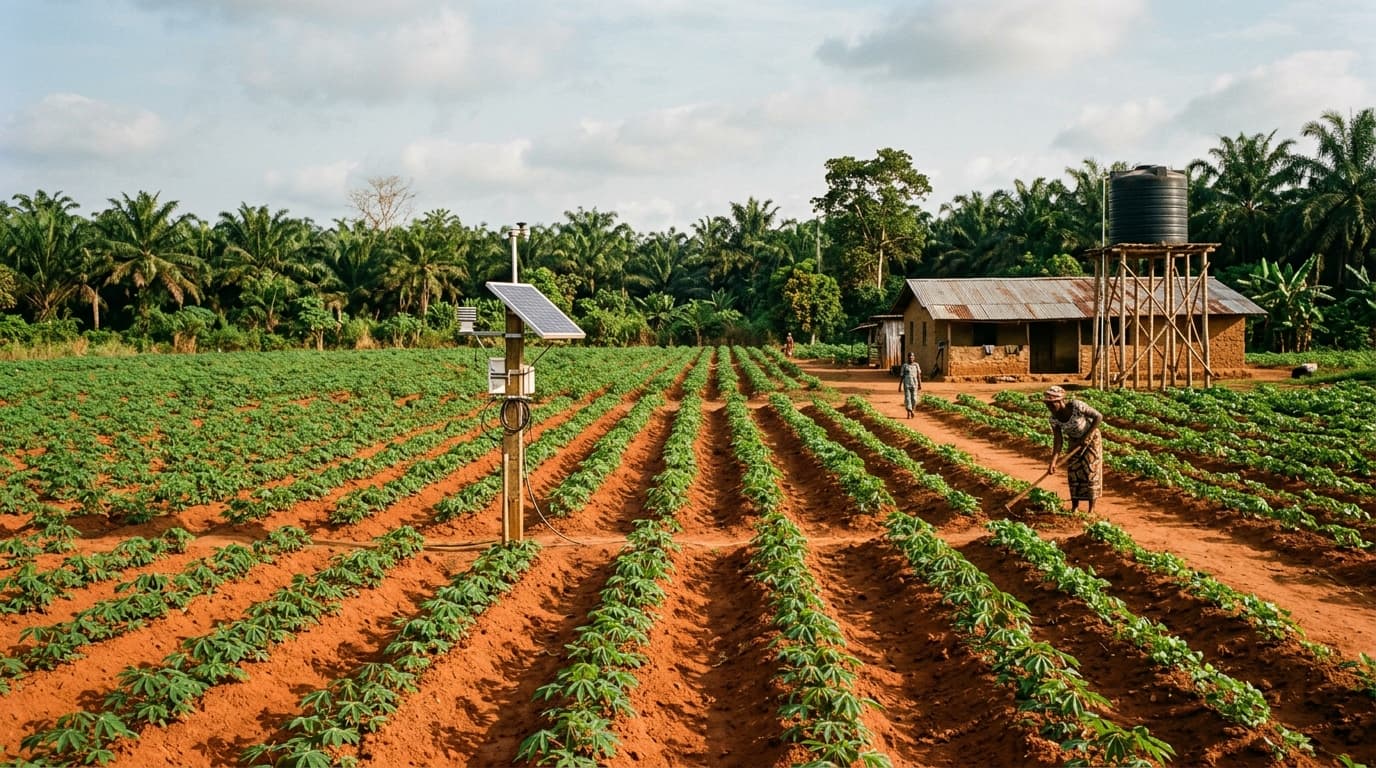
Tell us about your farm.
Where you are, what you grow, and what is stopping you planting when you want to.